
Rise & Fall of Brands is expanding into a new section focused on chemistry‑driven illnesses
Chemistry is everywhere — in the air we breathe, the food we eat, the products we use, and the environments we live in. Many of the world’s deadliest illnesses begin long before symptoms appear, triggered by chemical reactions inside the body or chemical exposures in daily life.
From endocrine disruptors in plastics, to PFAS in cookware, to benzene in aerosols, to nitrosamines in processed foods, modern life exposes us to compounds that can influence hormone balance, DNA stability, inflammation, and long‑term disease risk. Understanding these chemical pathways helps explain why illnesses develop and how modern treatments work.
This category focuses on non‑infectious diseases — cancers, cardiovascular disorders, metabolic conditions, and neurodegenerative illnesses — where chemistry drives both risk and treatment. Infectious diseases (HIV, TB, malaria, etc.) are excluded to keep the focus on chemistry‑driven non‑communicable diseases.
Global Burden Snapshot (2026)
Approximate share of global deaths by major non‑infectious illnesses (WorldPopulationClock 2026, WHO Global Health Estimates):
| Illness | Category | Approximate Share of Global Deaths |
|---|---|---|
| Ischemic heart disease | Cardiovascular | 29.8% |
| Cancer (lung + prostate combined) | Oncology | 16.7% |
| COPD (Chronic Obstructive Pulmonary Disease) | Respiratory | 5.3% |
| Stroke | Neurological | 4.3% |
| Dementia & Alzheimer’s | Neurodegenerative | 3.7% |
| Diabetes mellitus | Metabolic | 2.7% |
These six illnesses represent the majority of global non‑infectious mortality — and each one has a clear chemical foundation.
Why Chemistry Matters to These Illnesses
- Oxidative stress damages DNA and accelerates aging
- Inflammation pathways drive chronic disease
- Hormone chemistry influences cancer growth
- Cholesterol oxidation triggers heart disease
- Protein misfolding causes neurodegeneration
- Glucose metabolism defines diabetes progression
- Environmental chemicals disrupt endocrine and immune systems
Chemistry explains both the cause and the cure.
Daily‑Life Chemicals Linked to Illness (ACS + CancerChoices)
These categories of chemicals are found in everyday environments and have documented links to cancer or chronic disease:
- Endocrine disruptors (BPA, phthalates, some pesticides)
- PFAS (“forever chemicals”) in cookware, packaging, cosmetics
- Volatile organic compounds (VOCs) such as benzene and formaldehyde
- Nitrosamines in processed meats and some cosmetics
- PAHs from smoke, exhaust, and high‑temperature cooking
- Heavy metals (cadmium, arsenic, lead)
- Coal tar derivatives in some cosmetic colorants
- 1,4‑Dioxane contamination in shampoos and detergents
These exposures don’t guarantee illness — but they help explain why chemistry is central to modern disease prevention.
Our Analysis Sequence (Based on Global Mortality Data)
We will analyze each illness individually, following the order of global impact:
- Ischemic Heart Disease
- Cancer (starting with prostate cancer)
- COPD
- Stroke
- Dementia & Alzheimer’s
- Diabetes mellitus
Each illness page will include:
- How the illness starts (chemical mechanisms)
- What medicines exist
- How those medicines work (APIs, pathways)
- Which brands dominate the market
- Which chemicals increase risk
- Natural compounds with evidence
- Regulatory considerations (FDA, EU, WHO)
Heart Disease
Chemistry, Mechanisms & Modern Treatments
Ischemic heart disease (IHD), also known as coronary artery disease, is the world’s leading cause of death. It develops when blood flow to the heart becomes restricted, usually due to chemical and biological processes that damage blood vessels over time. Understanding these chemical pathways helps explain why the disease forms, how medicines work, and how everyday exposures influence risk.
This page focuses on non‑infectious, chemistry‑driven mechanisms, using neutral, evidence‑based information from WHO, ACS, and global cardiovascular research.
1. How Ischemic Heart Disease Starts (Chemical & Biological Mechanisms)
Ischemic heart disease begins with atherosclerosis, a slow buildup of fatty and inflammatory material inside arteries. This process is deeply chemical:
A. Cholesterol Oxidation — The Chemical Trigger Behind Heart Disease
Cholesterol is an essential molecule in the human body. About 80% is produced internally, and the remaining 20% comes from foods of animal origin. It supports cell membranes, hormone synthesis, bile acid production, vitamin D formation, and immune and nervous system function. But cholesterol becomes dangerous when it undergoes oxidation.
When exposed to heat, light, or oxygen, cholesterol molecules can transform into cholesterol oxidation products (COPs) — also known as oxysterols. These oxidized derivatives are biologically active and can damage tissues, trigger inflammation, and initiate the earliest stages of atherosclerosis.
When exposed to heat, light, or oxygen, cholesterol molecules can transform into cholesterol oxidation products (COPs) — also known as oxysterols. The figure shows the molecule of one of the most stables: 7‑ketocholesterol. These oxidized derivatives are biologically active and can damage tissues, trigger inflammation, and initiate the earliest stages of atherosclerosis.
Oxysterols form in two places:
- Inside the body, when LDL cholesterol is attacked by reactive oxygen species (ROS)
- In foods, especially when animal products are heated, fried, grilled, or reheated. These foods contain oxidized cholesterol before they even enter the bloodstream, adding to the oxidative burden inside the body.
Once formed, oxysterols can:
- injure endothelial cells
- activate immune cells
- accelerate plaque formation
- contribute to chronic inflammation
- increase long‑term risk of heart disease, diabetes, and neurodegenerative disorders
This chemical transformation — from cholesterol to COPs — is one of the earliest and most important steps in the development of ischemic heart disease.
B. Inflammation Chemistry — The Immune System Responds to Oxidized Cholesterol
Once cholesterol becomes oxidized, the immune system reacts. Macrophages enter the arterial wall to clear oxidized LDL, but in the process they become foam cells — lipid‑loaded immune cells that release inflammatory signals. Key chemical players include:
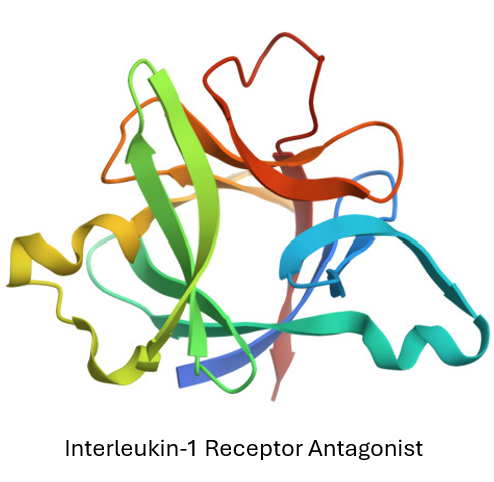
- releasing pro-inflammatory cytokines such as Interleukin-1 beta cytokines (IL‑1β, IL‑6, TNF‑α)
- C‑reactive protein
- oxidative enzymes
These molecules amplify inflammation and accelerate plaque growth.
C. Endothelial Dysfunction — Chemical Injury to the Vessel Wall
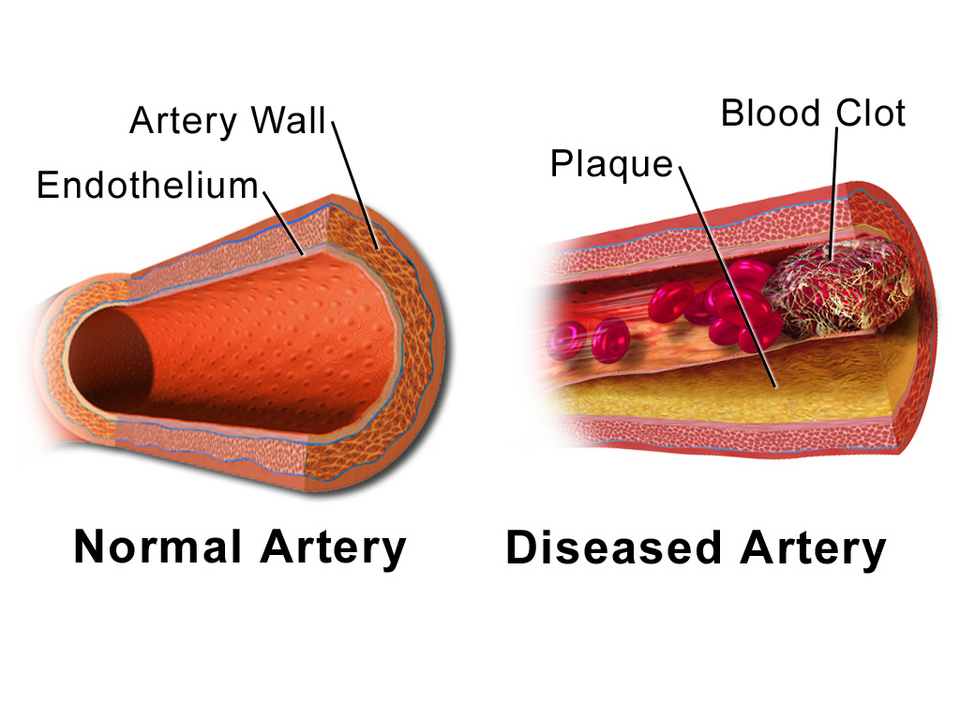
The endothelium (inner lining of blood vessels) becomes damaged by:
- high blood pressure
- high glucose
- smoking chemicals
- heavy metals
- PFAS
- VOCs (benzene, formaldehyde)
Damaged endothelial cells lose their ability to regulate nitric oxide, blood flow, and clotting.
This dysfunction allows more LDL to enter the arterial wall, creating a feedback loop with inflammation.
D. Clot Chemistry
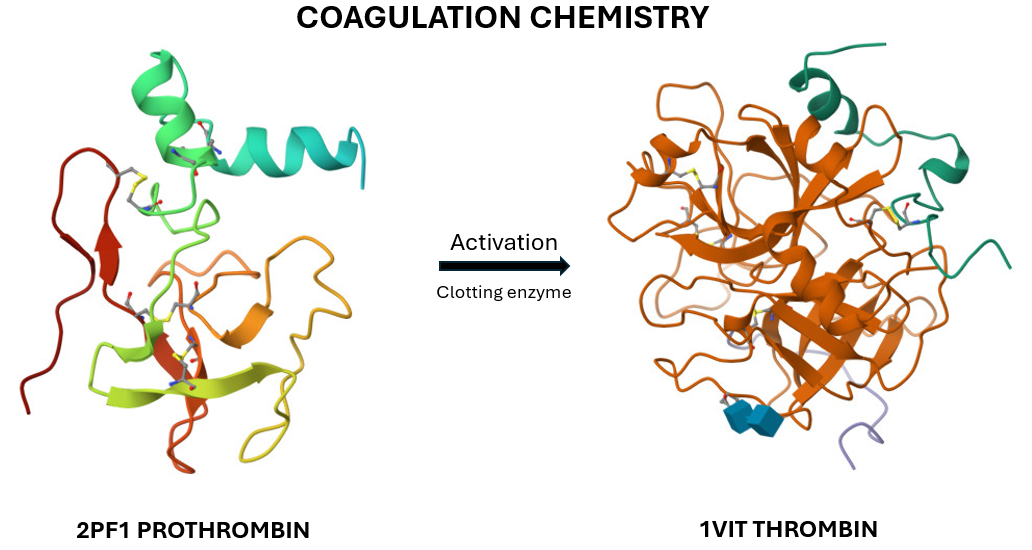
When plaques rupture, the coagulation cascade activates. The key chemical transformation is:
Prothrombin → Thrombin → Fibrin
Thrombin converts fibrinogen into fibrin, forming a clot. If the clot blocks a coronary artery, blood flow stops — resulting in a heart attack.
If a clot blocks a coronary artery, a heart attack occurs.
2. Medicines Used Today (General Mechanisms)
Modern heart‑attack treatment relies on medicines that target different parts of the disease process. To make this easier to understand, the table below summarizes what each medicine does, how it works, and which part of the heart‑attack pathway it helps control.
| Medicine Category | What It Does | How It Works (Mechanism) | Examples |
|---|---|---|---|
| ACE inhibitors | Lower blood pressure | Block angiotensin conversion | Lisinopril, Enalapril |
| Anticoagulants | Reduce clot growth | Block coagulation factors | Heparin, Warfarin |
| Antiplatelets | Prevent clot formation | Block platelet activation | Aspirin, Clopidogrel |
| Beta‑blockers | Reduce heart workload | Block adrenaline receptors | Metoprolol, Atenolol |
| Nitrates | Improve blood flow | Dilate coronary arteries | Nitroglycerin |
| Statins | Lower LDL cholesterol | Inhibit HMG‑CoA reductase | Atorvastatin, Rosuvastatin |
| Thrombolytics | Dissolve clots | Activate plasmin | Alteplase, Tenecteplase |
3. APIs (Active Pharmaceutical Ingredients)
Modern heart‑attack medicines work through biological mechanisms, but each one is built from a specific Active Pharmaceutical Ingredient (API) — the chemical structure that gives the drug its effect.
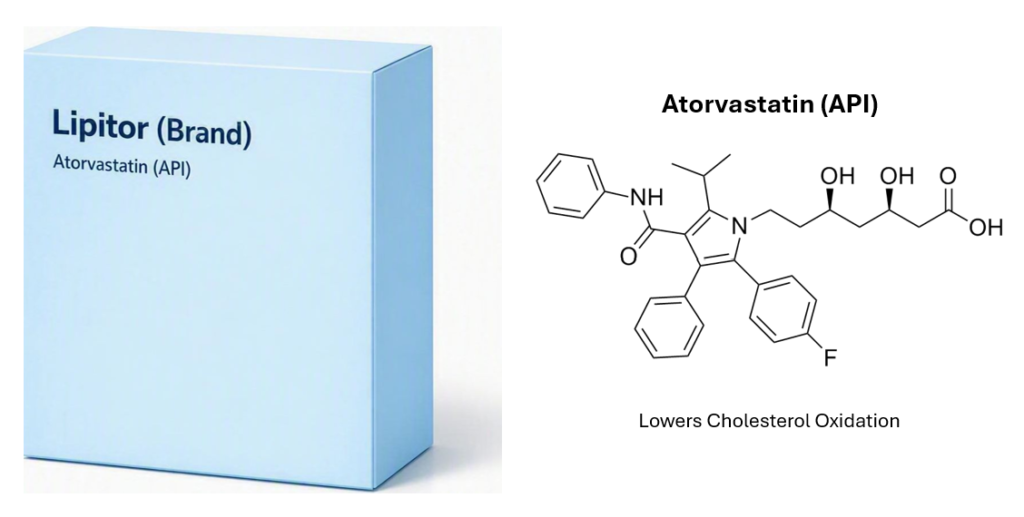
In Section (2), we explained how each medicine works in the body. In Section (3), we show what each medicine is made of, including its functional groups, protein targets, and chemical behavior.
Understanding APIs helps readers compare medicines more confidently, recognize differences between brands, and make informed decisions based on reliable information available.
| Drug Name (API) | Category | Mechanism (Simple) | Functional Groups | Protein Target | Brands |
|---|---|---|---|---|---|
| Atorvastatin | Statin | Lowers LDL | Lactone ring, fluorophenyl | HMG‑CoA reductase | Lipitor |
| Rosuvastatin | Statin | Lowers LDL | Sulfonamide | HMG‑CoA reductase | Crestor |
| Clopidogrel | Antiplatelet | Prevents clots | Thiophene | P2Y12 receptor | Plavix |
| Aspirin | Antiplatelet | Prevents clots | Acetyl group | COX‑1 | Bayer Aspirin |
| Metoprolol | Beta‑blocker | Reduces heart workload | Ether, alcohol | β1 receptor | Lopressor |
| Lisinopril | ACE inhibitor | Lowers blood pressure | Carboxylate | ACE enzyme | Prinivil |
| Nitroglycerin | Nitrate | Dilates arteries | Nitrate esters | Smooth muscle | Nitrostat |
Brand vs Generic Comparison Table
Brand‑name medicines are protected by patents that typically last around 20 years, although much of this time is spent during research and testing. By the time a drug reaches the market, about 10 years of patent protection usually remain.
Once the patent expires, other companies are allowed to produce generic versions using the same API. This is why multiple generics can exist for the same medicine — each must prove it has the same chemical structure and therapeutic effect, even if inactive ingredients differ.
Who regulates medicines around the world
Medicines — both brand‑name and generics — are regulated by national or regional agencies that ensure quality, safety, and effectiveness before they reach the public. In the United States, the FDA (Food and Drug Administration) oversees drug approval and generic entry. In the European Union, the EMA (European Medicines Agency) works with national authorities to evaluate and monitor medicines. Other regions have their own regulators, such as Health Canada, PMDA (Japan), TGA (Australia), and the Thai FDA. Although each agency has its own procedures, all follow strict international standards to guarantee that both brand and generic medicines meet the same safety and performance requirements.
Introducing medicine safety
All approved medicines must meet rigorous safety standards before they can be sold. Regulators require extensive testing to confirm that a drug’s benefits outweigh its risks, and they continuously monitor medicines after approval to detect rare side effects or manufacturing issues. Generic medicines must also prove bioequivalence, meaning they deliver the same API to the body at the same rate and in the same amount as the brand‑name version. This ensures that generics are just as safe and effective as the original drug, even if inactive ingredients differ.
Cardiovascular Drug Popularity Trends
Global interest in heart medicines changes more than most people expect. By analyzing five years of Google Trends data, we uncovered how search popularity moves — sometimes slowly, sometimes dramatically. The racing chart below brings this movement to life, showing Lipitor’s leadership, Crestor’s rapid ascent, and the steady behavior of emergency‑use drugs like Nitroglycerin. This section explores how cardiovascular treatments compete for global attention.
This racing chart focuses exclusively on the original branded versions of each medicine — Lipitor, Crestor, Plavix, Prinivil, Lopressor, and Nitrostat. Although generics exist for most of these treatments, their search interest is fragmented across multiple manufacturers, making the data too inconsistent for meaningful visualization. Readers seeking detailed information about generic equivalents can refer to external medical resources such as Drugs.com.
Reddit Insights Table
Public conversations on Reddit reveal how people experience these medicines in real life — from effectiveness to side effects and common questions. The table below summarizes the recurring themes shared across multiple health communities, offering a clear snapshot of how each brand is perceived by users.
| Medicine | Effectiveness Themes | Negative Side‑Effect Themes | Common User Questions / Patterns |
|---|---|---|---|
| Lipitor (Atorvastatin) | Strong cholesterol reduction; fast results; many users report “zero sides and great results.” | Muscle pain, fatigue, gastrointestinal discomfort (gas, bloating), occasional severe body aches. | Should I switch to Crestor? Is muscle pain normal? How long until side effects improve? |
| Crestor (Rosuvastatin) | Very strong LDL and ApoB reduction; rapid improvements (4 weeks); often praised for effectiveness. | Muscle/joint aches (shoulders, hips, legs), weakness, reduced physical activity. | Should I lower the dose? Combine with ezetimibe? Switch to Lipitor? |
| Plavix (Clopidogrel) | Effective for clot prevention; users report feeling better after stopping if side effects were severe. | Headaches, dizziness, neurological symptoms, easy bruising, bleeding. | How long do dizziness/headaches last? Is bruising normal? Should I adjust dosage? |
| Lisinopril | Reliable blood pressure control; long‑term users report stable results. | Persistent cough, occasional BP fluctuations, sensitivity to dosage timing. | Should I switch to Losartan? Why am I coughing? Best time of day to take it? |
| Metoprolol | Effective heart rate control; helps with palpitations and anxiety for some users. | Fatigue, low energy, low heart rate, sleepiness. | Why am I so tired? Should I adjust timing? Is my heart rate too low? |
| Nitroglycerin (Nitrostat) | Works quickly during chest pain episodes; reliable emergency use. | Headaches, flushing, lightheadedness. | When should I use it? Is headache normal? How often is safe? |
Twitter Insights Table
On Twitter, discussions around cardiovascular medicines are shaped by news events, clinical debates, recalls, and regulatory updates. The table below highlights the most relevant attention spikes and medical conversations that influence how each brand is viewed on the platform.
| Medicine | News / Events | Clinical Discussions | Public Reactions |
|---|---|---|---|
| Lipitor | Generic atorvastatin recall (Ascend Labs, late 2025). | Cognitive effects debate; FDA label warnings; tolerability discussions. | Users share muscle/joint stiffness, brain fog concerns; long‑term users report stability. |
| Crestor | Posts referencing myopathy warnings; rare autoimmune necrotizing myopathy cases. | LDL lowering effectiveness; diabetes/cataract risk debates; CK elevation concerns. | Mixed reactions: strong LDL results vs muscle pain; some severe myopathy stories. |
| Plavix | $700M legal settlement (Hawaii, 2025); CYP2C19 genetic activation issues. | Boxed warning discussions; genetic testing for stent patients; antiplatelet strategy debates. | Concerns about bleeding; questions about effectiveness in poor metabolizers. |
| Lisinopril | Educational posts about pregnancy contraindication; potassium/angioedema warnings. | ACE inhibitor mechanism; cough as class effect; comparisons with ARBs. | Many posts about persistent cough; interest in natural BP alternatives. |
| Metoprolol | Trial references (e.g., aficamten outperforming metoprolol in HCM study). | Beta‑blocker effects; masking hypoglycemia; weight gain debates; succinate vs tartrate. | Users report fatigue, low HR, metabolic concerns. |
| Nitroglycerin | Study showing coronary flow decrease (~13%); PDE5 inhibitor danger warnings. | Sublingual mechanism; vasodilation effects; emergency use guidelines. | Headache complaints; confusion about “opening arteries” vs reducing demand. |