THE ANALYTICAL CHEMISTRY INSTRUMENTS: RISE AND FALL OF BRANDS (1975–2025)
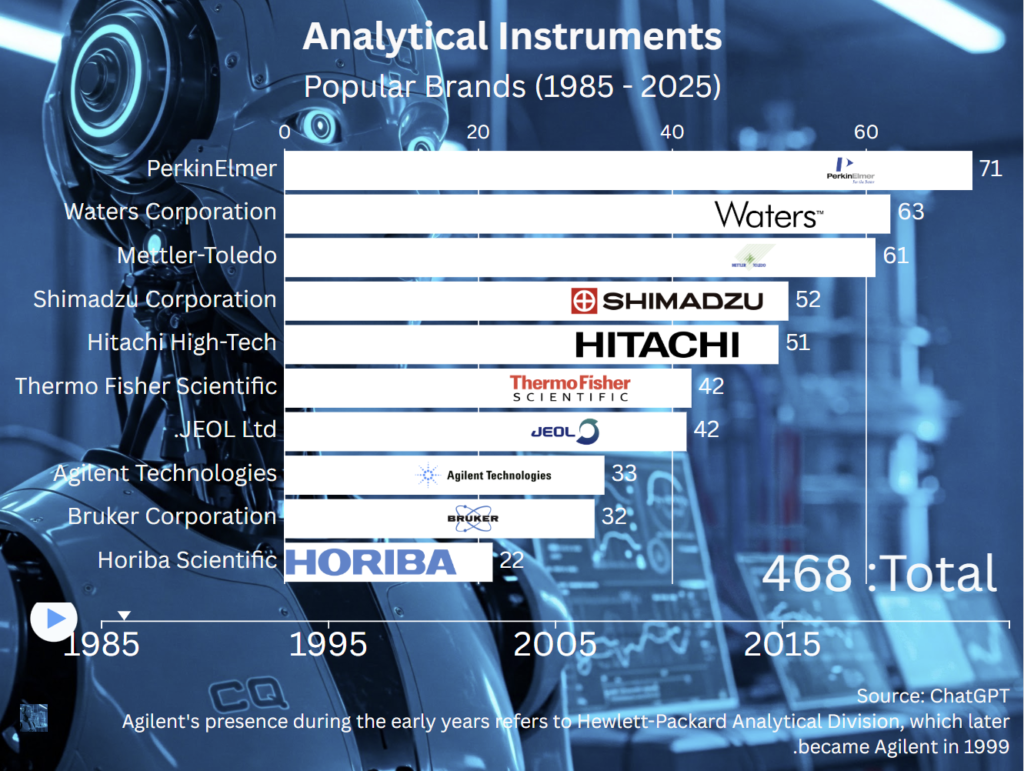
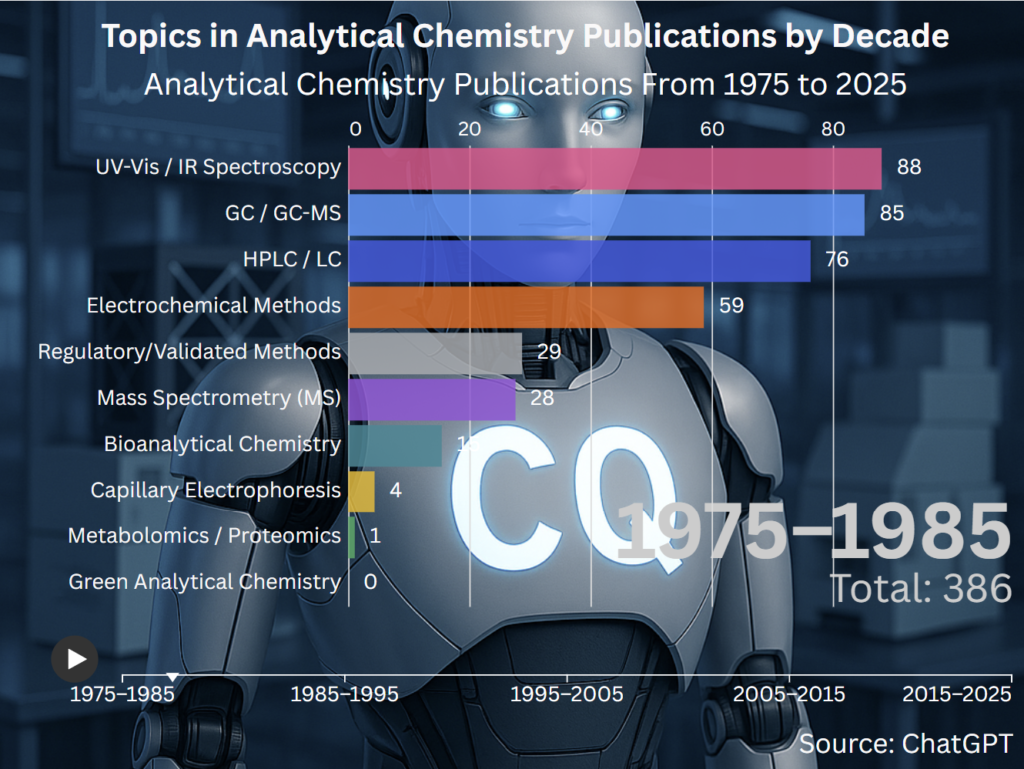
Analytical chemistry instruments are the backbone of modern laboratory science. They transform scientific questions into precise measurements, and measurements into confident decisions. From UV-VIS spectrophotometers to high-performance liquid chromatography (HPLC) systems, these analytical chemistry instruments have defined what can be measured over the past 50 years.
0. Why Analytical Chemistry Exists
Analytical chemistry is the discipline that transforms questions into measurements, and measurements into decisions.
It exists to:
- verify the identity and purity of materials
- ensure product quality
- protect public health
- support medicine, environment, and industry
- understand how substances behave
Every instrument, method, and technique developed over the last 50 years has served this purpose: to produce reliable data.
1. The Birth of Modern Instruments (1975–1990)
The era when laboratory tools defined what could be measured
Modern analytical chemistry began with the rise of robust, reliable instruments:
- UV‑VIS spectrophotometers
- early chromatographs
- detectors and autosamplers
- the first integrated systems
- the emergence of global instrument brands
This period established the foundation for all future analytical methods.
2. The Rise of HPLC (1980–2000)
When separation became the backbone of modern analysis
Once instruments matured, laboratories needed a technique that was:
- fast
- reproducible
- sensitive
- compatible with many analytes
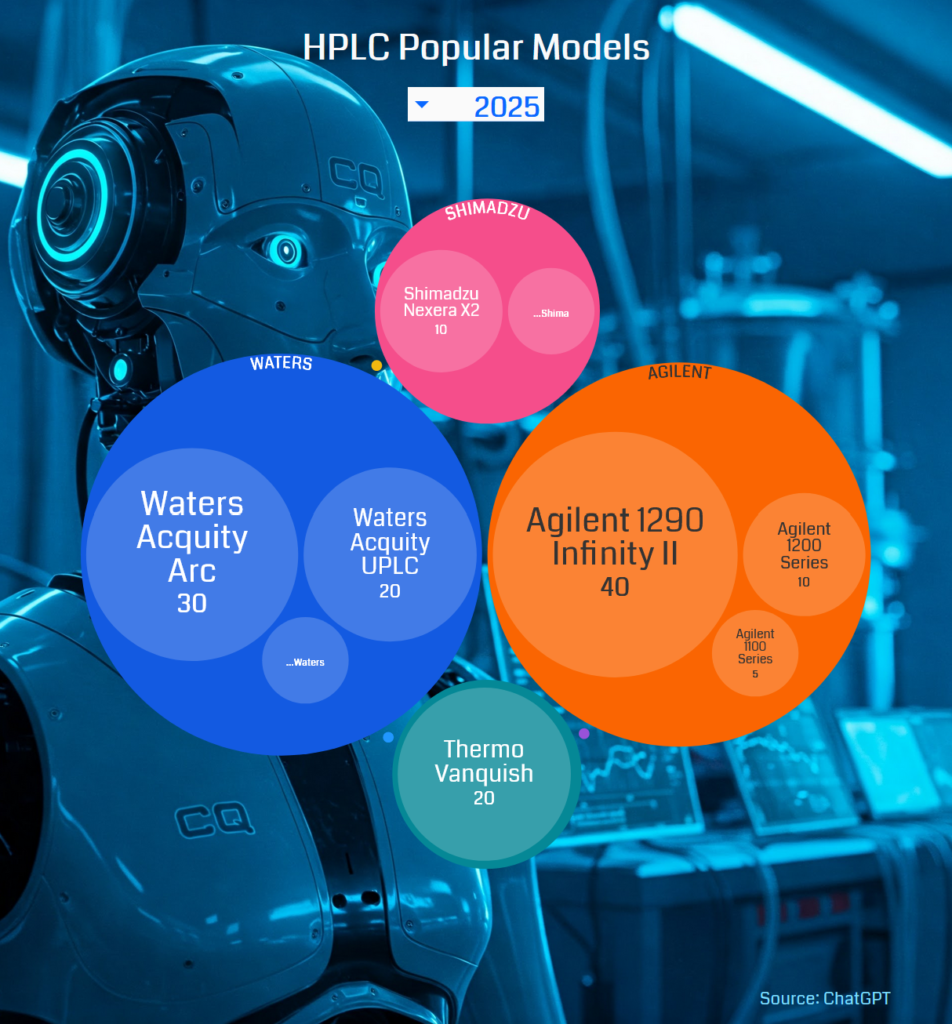
HPLC became the dominant method for pharmaceutical, environmental, and industrial analysis.
This era saw:
- the first popular HPLC models
- modular systems
- quaternary pumps
- early diode‑array detectors
- digital control and automation
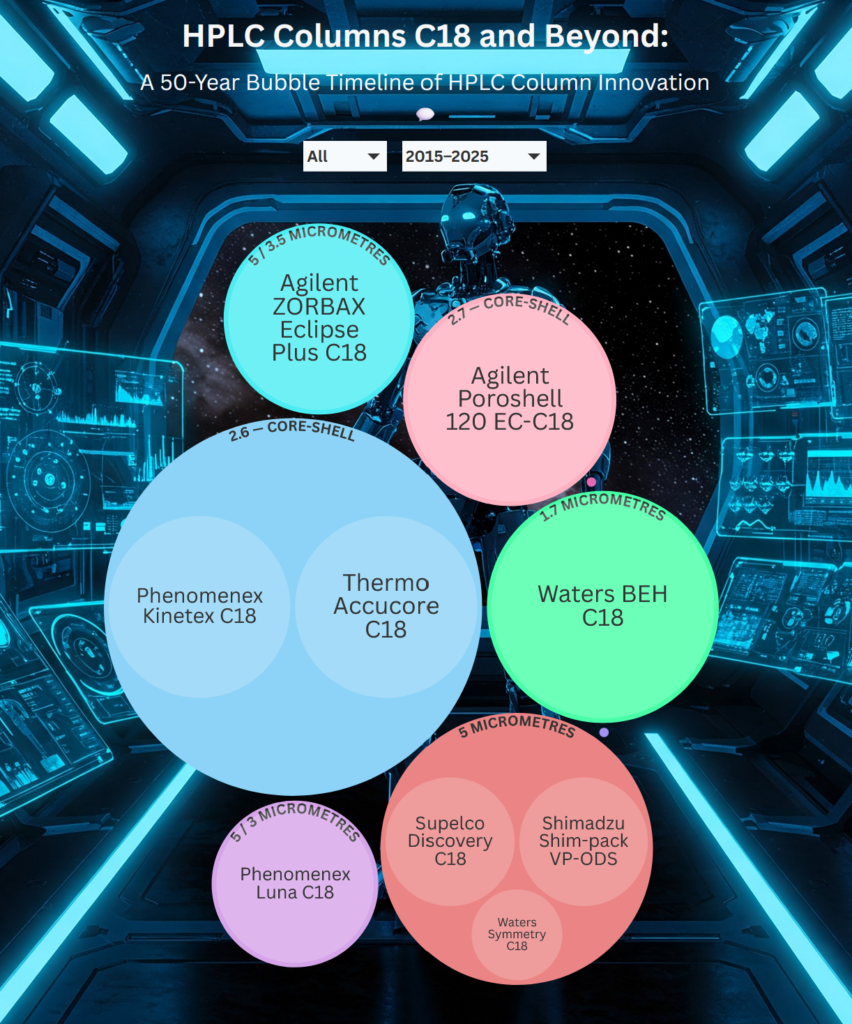
3. Improving Separation: Column Technology (1990–2010)
When chemistry inside the column became the key to performance
After HPLC became standard, the next frontier was selectivity.
Column technology evolved from:
- classical C18
- to C8, phenyl, cyano
- to polar‑embedded phases
- to core‑shell particles
- to UHPLC columns
This era defined how fast and how well complex mixtures could be separated.
4. Perfecting Chemistry: Mobile Phases (1990–2025)
When solvents became as important as the instrument
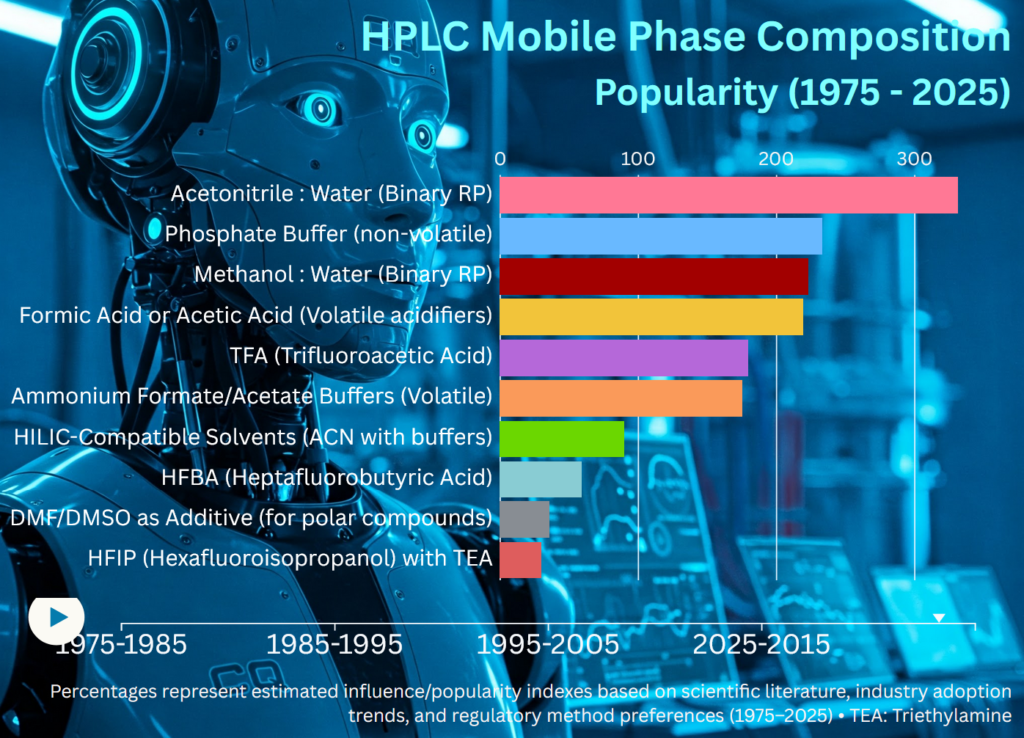
Once columns improved, the next step was optimizing the mobile phase.
The evolution includes:
- methanol → acetonitrile
- phosphate buffers → volatile buffers
- LC‑MS compatibility
- HILIC solvents
- HFIP, DMF, DMSO for complex molecules
This shift reflects the growing need for sensitivity, selectivity, and mass‑spectrometry compatibility.
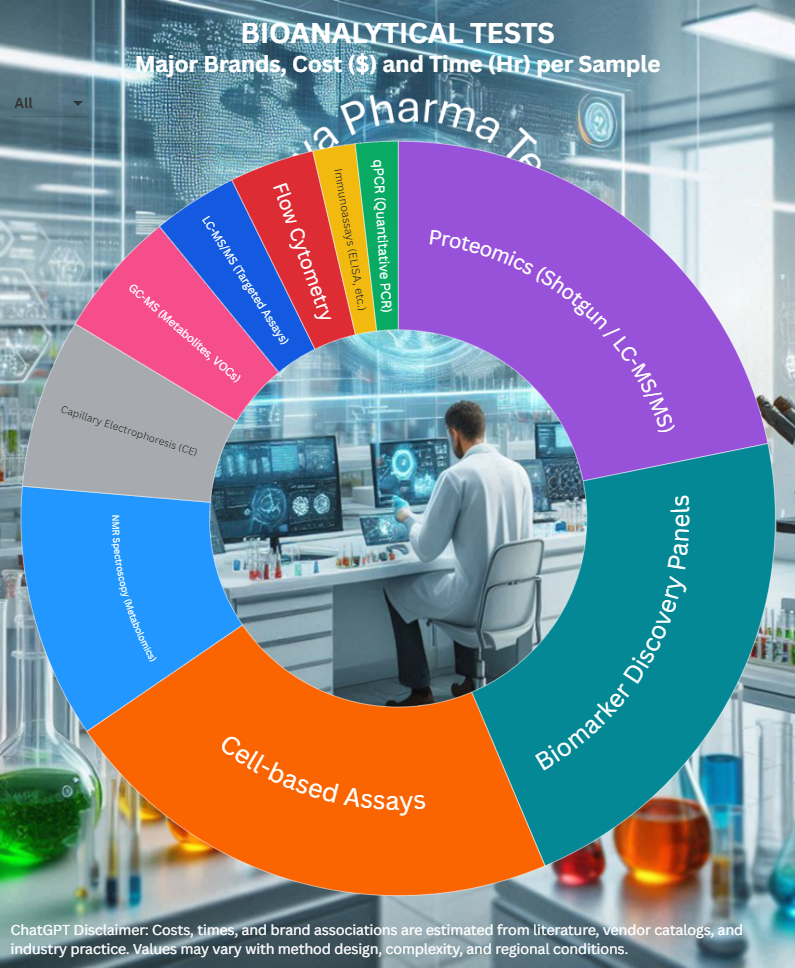
5. Expanding the Scope: Bioanalysis & New Molecules (2000–2020)
When analytical chemistry had to adapt to biology
As medicine evolved, analytical chemistry followed.
This era includes:
- LC‑MS/MS dominance
- immunoassays
- hybrid techniques
- high‑throughput workflows
- new analytes: peptides, oligos, biologics
Bioanalysis became one of the fastest‑growing areas in the field.
6. Regulation Shapes the Lab (1990–2025)
When FDA/EMA requirements defined what methods became standard
Regulation doesn’t follow science — it drives it.
This era includes:
- method validation
- impurity profiling
- stability testing
- bioequivalence
- analytical requirements in submissions
Regulatory expectations shaped which methods became standard across industries.
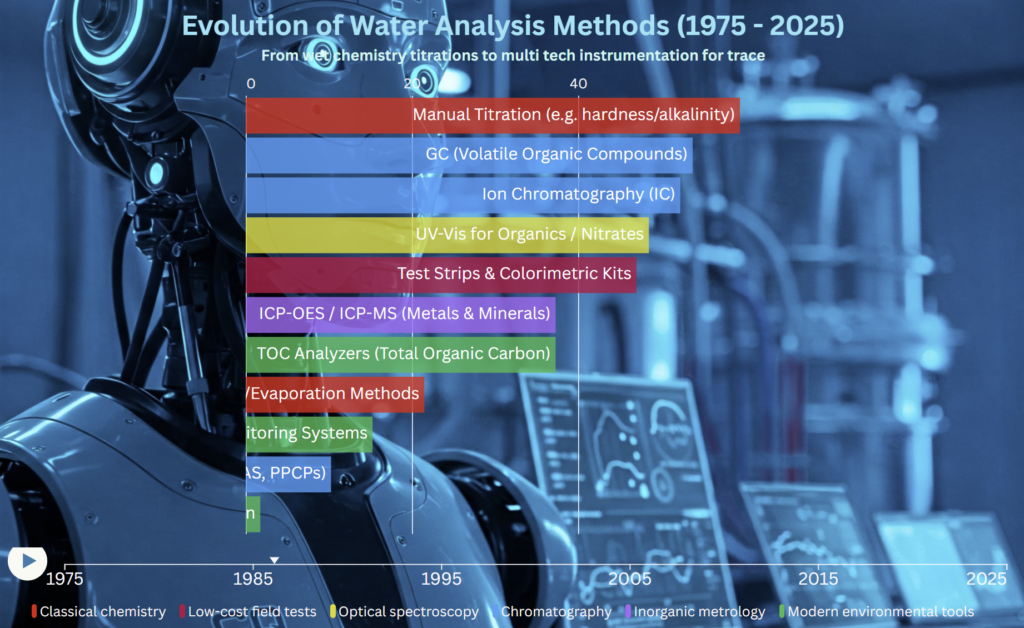
7. Water & Environmental Analysis (1975–2025)
The universal analysis that connects all industries
Water analysis is the most universal form of analytical chemistry.
It touches:
- environment
- pharma
- food
- manufacturing
- public health
It represents the foundation of measurement science — the simplest and most essential form of analysis.
8. The Transition to Data‑Driven Chemistry (2025 →)
Where Rise & Fall of Brands enters the story
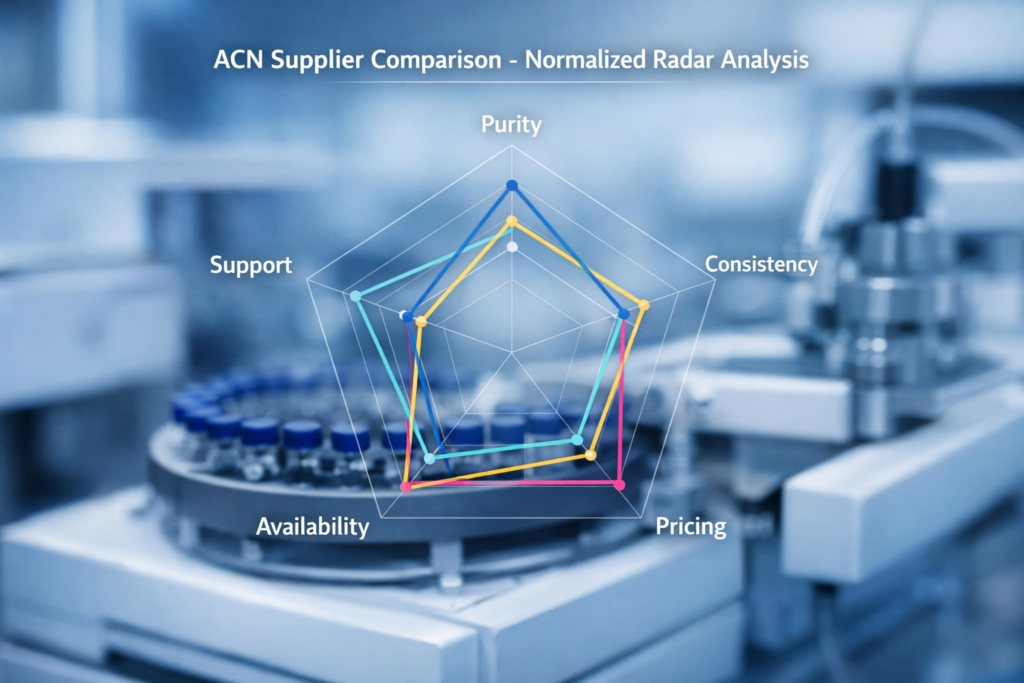
After 50 years of evolution, the next step is not a new instrument — it’s a new way to compare, visualize, and decide.
This is where the Rise & Fall of Brands methodology begins:
- ACN Supplier Radar
- HPLC Column Comparison
- UV‑VIS Analyzer Comparison
- GC Column Comparison
- Water Purification Systems
- Instrument Reliability Radar
This is the bridge between history
and modern data‑quality analysis.