
Video Games Premium Insight – Part 1
Thank you for joining our community. Here, you’ll find more than hardware specs or marketing claims — you’ll find real sentiment, real user reactions, and a clear understanding of how today’s gaming devices perform where it matters most: in the games people actually play.
This report focuses on the premium releases shaping the 2024–2026 landscape — the high‑impact titles that influence how players perceive each platform. We don’t review or critique individual games; instead, we analyze how these major releases affect user experience, platform reputation, and overall market momentum.
Alongside these premium titles, the gaming world is also defined by long‑term ecosystems such as Roblox, Minecraft, and Fortnite. Because these experiences behave differently — persistent, community‑driven, and not tied to release cycles — we cover them separately in a dedicated Evergreen Ecosystems report.
Our data consistently shows that a platform’s reputation is deeply connected to the games associated with it. Hardware matters, but the emotional experience comes from the titles that define each device’s identity.
This report blends platform analysis with aggregated sentiment from the premium games driving today’s market. It’s a clear, structured view designed to help you understand how players think, what they value, and how these games shape the broader ecosystem.
Recent Game Releases (by Platform)
These are some of the most influential and widely discussed titles released in recent months. We include them not to review the games themselves, but to provide context for the user experiences that shape each platform’s reputation.
| Platform | Key Recent Titles |
|---|---|
| PlayStation (PS5 / PS5 Slim) | Final Fantasy VII Rebirth, Stellar Blade, Rise of the Ronin, Helldivers 2 |
| Nintendo Switch / OLED | Princess Peach: Showtime!, Super Mario RPG Remake, Metroid Prime Remastered, Pikmin 4 |
| Xbox Series X / Refresh | Senua’s Saga: Hellblade II, Forza Motorsport (2023), Starfield, Hi‑Fi Rush |
| PC / Steam Deck OLED | Baldur’s Gate 3, Palworld, Helldivers 2, Manor Lords |
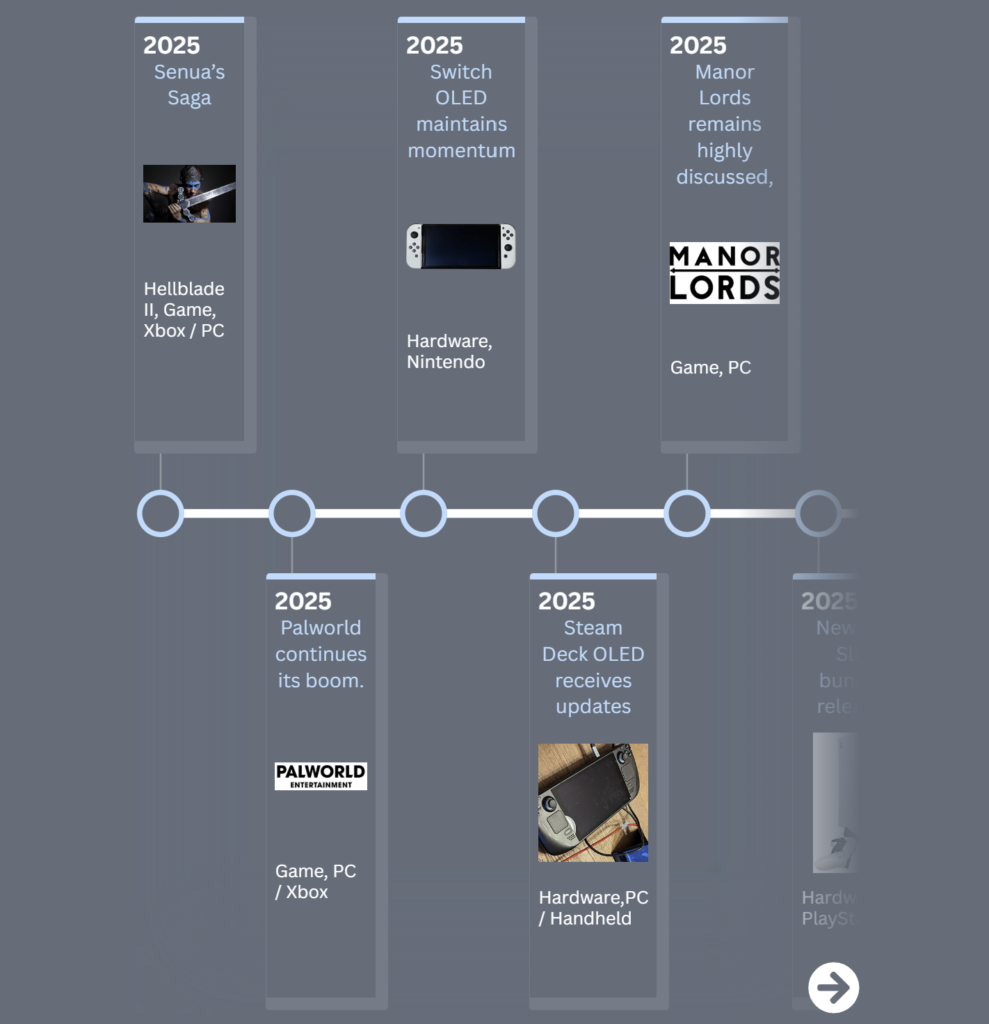
Notable Releases & Hardware Shifts (2025–2026)
Platform Comparison (PlayStation vs Xbox vs Nintendo vs PC)
This comparison highlights the strengths, weaknesses, and ecosystem strategies of the four major gaming platforms. It provides a clear, high‑level view of how PlayStation, Xbox, Nintendo, and PC differ in their approach to hardware, software, and player engagement. The goal is to help readers understand the unique position each platform holds in the 2025–2026 gaming landscape.
PlayStation

PlayStation enters 2025 with strong brand momentum and a loyal user base. While the exclusive lineup is thinner than previous years, the platform maintains cultural relevance through prestige titles and consistent hardware performance. PS5 Slim bundles help sustain sales, and the ecosystem remains one of the most stable in the industry.
Xbox
Xbox continues to lean heavily on Game Pass and cross-platform integration. While the exclusive pipeline is still recovering, AA titles like Hellblade II give the platform a unique identity. Xbox’s strategy is less about hardware dominance and more about ecosystem reach — PC, cloud, and console working together.

Nintendo

Nintendo’s strength lies in evergreen franchises and unmatched brand recognition. Switch OLED remains surprisingly strong despite aging hardware. The real driver of conversation in 2025–2026 is anticipation for the next Nintendo console, which dominates media speculation and fan discussions.
PC
PC gaming is experiencing a renaissance thanks to handheld devices like Steam Deck OLED, ROG Ally, and Legion Go. This shift makes PC gaming more accessible and portable than ever. Modding, flexibility, and massive libraries keep PC at the center of gaming culture, especially on TikTok and YouTube.

Platform Comparison Table (2025–2026)
| Platform | Strengths | Weaknesses | Ecosystem Notes |
|---|---|---|---|
| PlayStation | Strong brand loyalty, high-quality exclusives, PS5 Slim momentum | Fewer first-party releases in 2025, slower PC port strategy | Focus on prestige titles and cinematic experiences |
| Xbox | Game Pass value, strong AA presence, PC integration | Weak exclusive lineup, inconsistent hardware messaging | Ecosystem-first strategy, cloud gaming emphasis |
| Nintendo | Evergreen franchises, Switch OLED longevity, family-friendly appeal | Aging hardware, limited third-party performance | Anticipation for next-gen hardware drives conversation |
| PC | Handheld explosion (ROG Ally, Legion Go, Steam Deck OLED), modding, flexibility | Fragmentation, inconsistent optimization | Fastest-growing platform due to handheld PCs |
Key Games Shaping the Market (2025–2026)
These are the titles that had the strongest impact on the gaming landscape across 2025 and into 2026. Some reshaped entire genres, others dominated social media, and a few became cultural events far beyond gaming. This curated selection highlights the games that truly influenced player behavior, platform momentum, and industry conversation.
Palworld
Impact: Viral phenomenon, massive early‑access success Palworld became one of the most talked‑about games of 2025, driven by its mix of survival mechanics, creature collection, and meme‑friendly chaos. Its explosive presence on TikTok and YouTube helped it reach audiences far beyond traditional gamers.

Hellblade II

Impact: Prestige AA benchmark Ninja Theory delivered a visually stunning, narrative‑driven experience that redefined what AA production can achieve. Hellblade II strengthened Xbox’s identity around artistic, emotionally intense titles and became a reference point for cinematic storytelling.
Manor Lords
Impact: PC strategy breakthrough This indie‑scale city‑builder became a major PC hit thanks to its realistic medieval simulation and deep systems. Manor Lords dominated Steam charts and proved that single‑developer projects can still disrupt the market.

Black Myth: Wukong

Impact: Global cultural moment With its striking visuals and reinterpretation of Journey to the West, Wukong captured global attention. It became one of the most anticipated titles of 2026, trending heavily across Asian and Western gaming communities.
Monster Hunter Wilds
Impact: Franchise evolution Capcom’s next major entry in the Monster Hunter series generated massive anticipation. Its trailers and early previews dominated gaming media, reinforcing Monster Hunter as one of the most influential action‑RPG franchises.

GTA VI

Impact: Cultural dominance Even before release, GTA VI shaped the entire industry’s conversation. Every trailer, leak, and rumor became a global event. Its influence extends far beyond gaming, impacting entertainment, marketing, and social media trends.
Trends in Player Behavior (2025-2026)
How players think, choose, and react in today’s gaming landscape
Player behavior is shifting fast. Discovery, preferences, play habits, and expectations are no longer shaped by traditional marketing — they’re shaped by influencers, platforms, and the new rhythm of digital consumption. This section captures the most visible global patterns based on social activity, content consumption, platform evolution, and genre momentum.
🎮How do players discover new games?
Short‑Form Influence: TikTok & YouTube Drive Discovery
Players no longer rely on official trailers or gaming press. Today, the discovery cycle looks like this:
- TikTok → instant hype
- YouTube → analysis, guides, comparisons
- Streams → social validation
This explains breakout phenomena like Palworld, Manor Lords, and the massive anticipation around GTA VI. Modern players trust content creators more than advertising.
🎮What types of games earn the strongest preference?
AA Games Gain Respect and Cultural Weight
AA titles used to be “the middle tier.” Now they’re:
- more artistic
- more experimental
- more narrative‑driven
- more affordable
- more shareable on social media
Perfect examples:
- Hellblade II
- A Plague Tale: Requiem
Players increasingly value intense, focused, high‑quality experiences over long, bloated ones.
🕑How much time do players dedicate to gaming?
Handheld PC Adoption Changes Play Habits
The rise of:
- Steam Deck OLED
- ROG Ally
- Legion Go
has created a new kind of player who:
- plays in short sessions
- switches between handheld and desktop
- buys more games on PC
- values flexibility over raw power
This shift directly impacts PlayStation and Xbox, which still depend heavily on the TV‑centric experience.
👩💻What do players expect from platforms today?
Cross‑Platform Features Are Now Mandatory
Players no longer tolerate old‑school exclusivity. They expect:
- cross‑play
- cross‑save
- cross‑progression
If a game lacks these features, perception drops immediately. This trend heavily influences sentiment toward closed ecosystems.
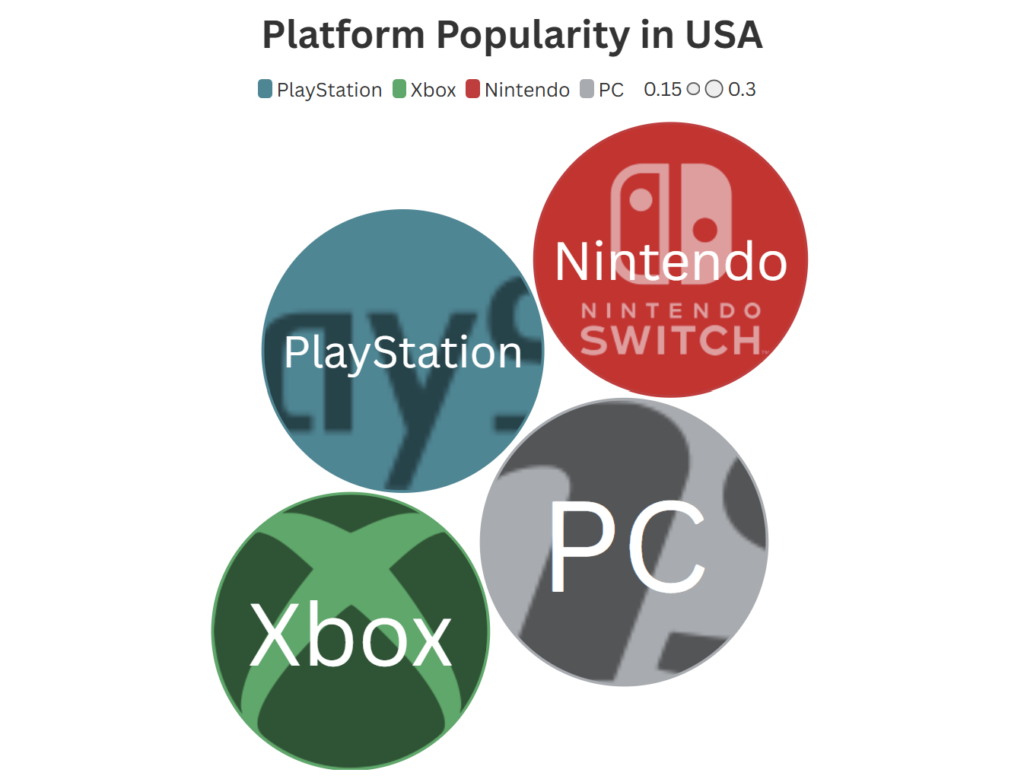
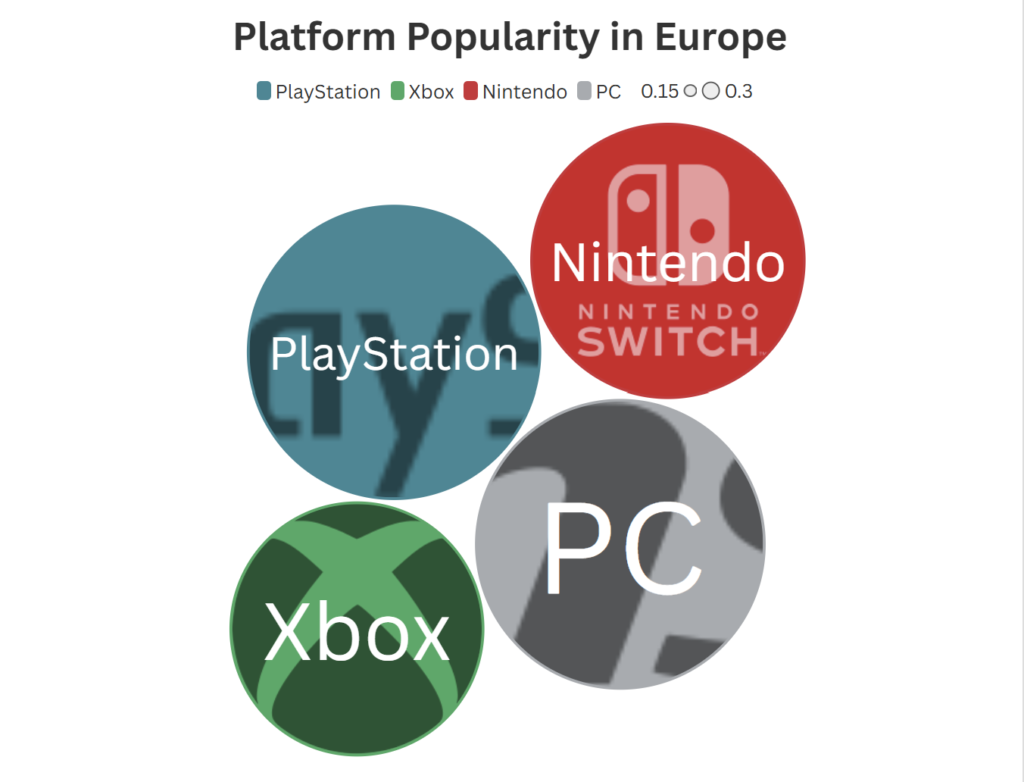
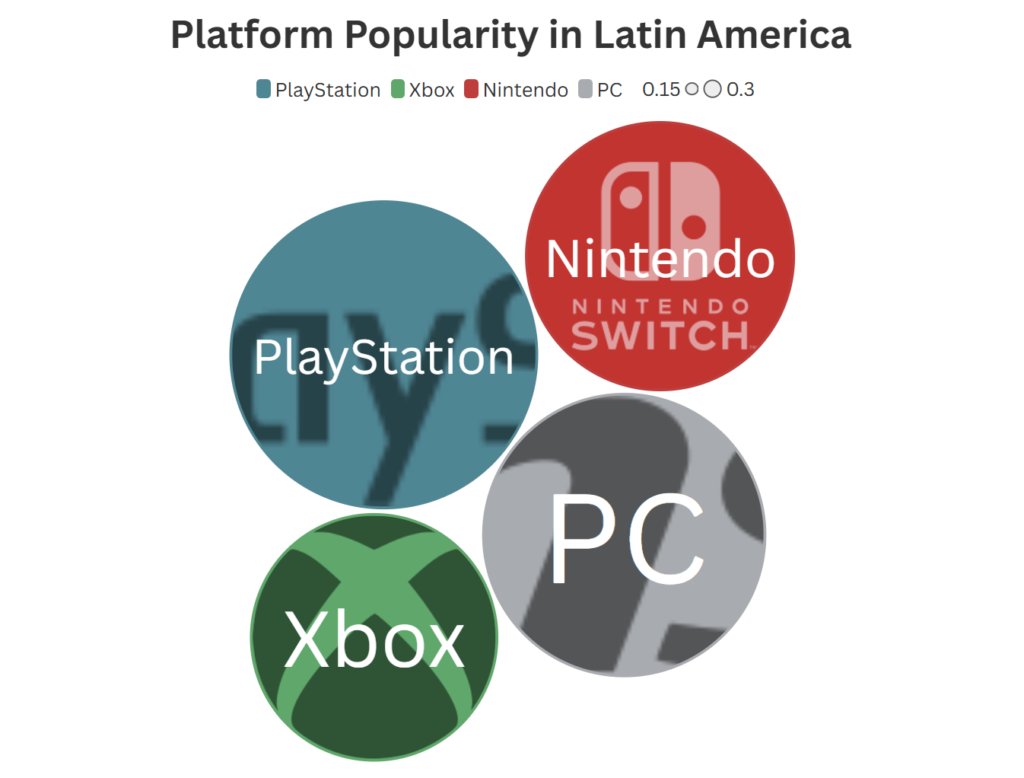
Popularity by Region
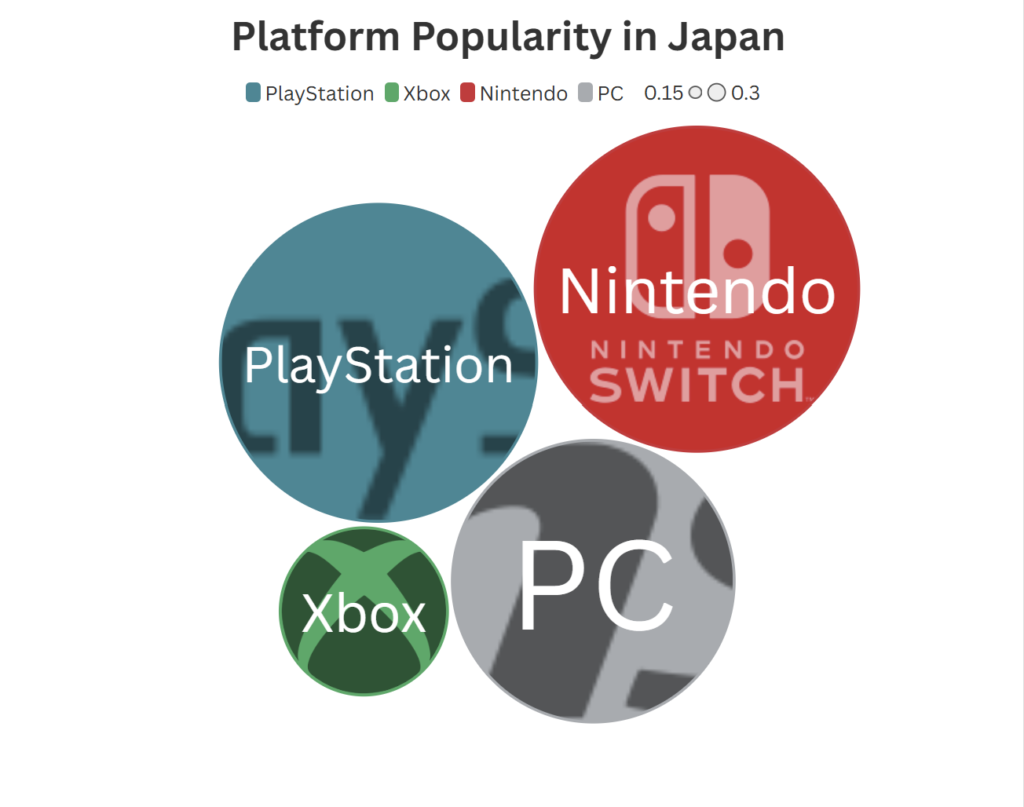
A regional comparison of platform popularity across the world, based on cultural trends, market behavior, and player preferences.
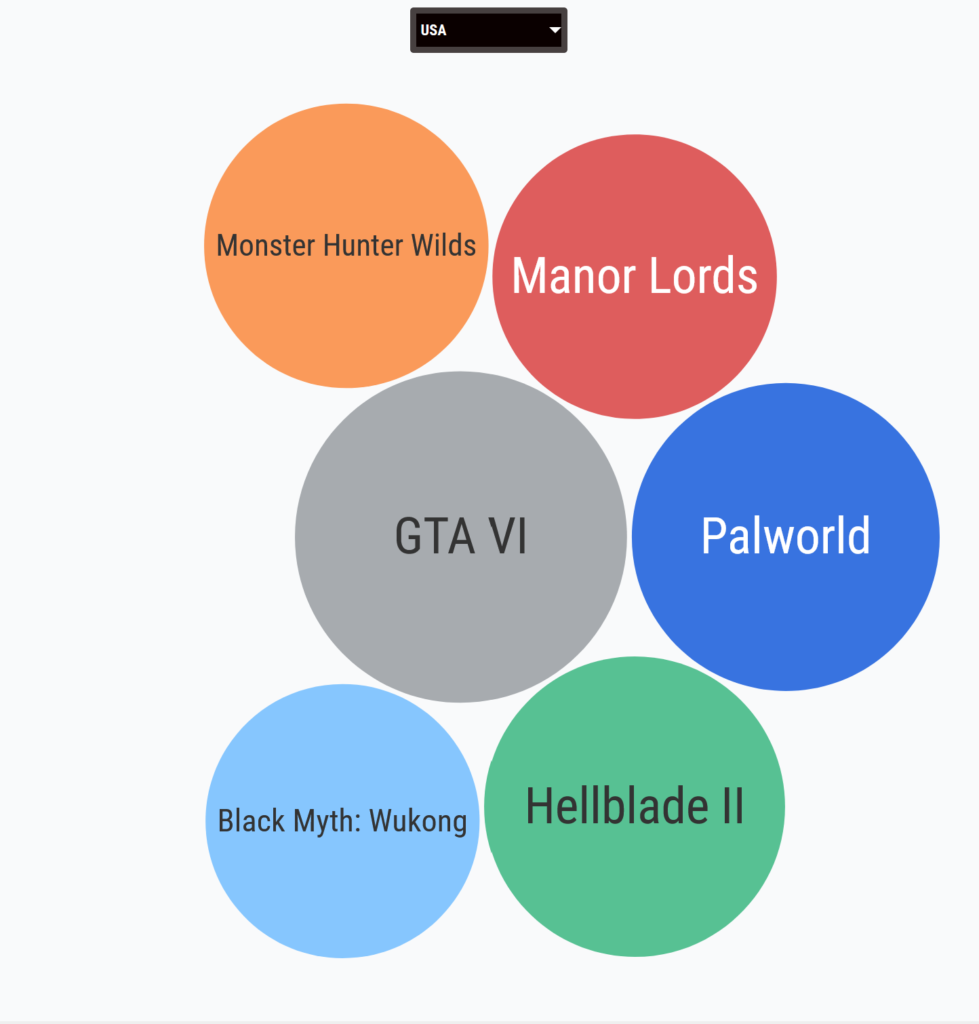
Game Popularity by Region
This chart compares the regional popularity of the most influential premium game releases of 2024–2026. Each bubble represents a title, with its size reflecting overall momentum and its position showing how interest shifts across Japan, the USA, Europe, Asia, and Latin America. Together, these games illustrate the global landscape of hype, cultural influence, and market expectations.
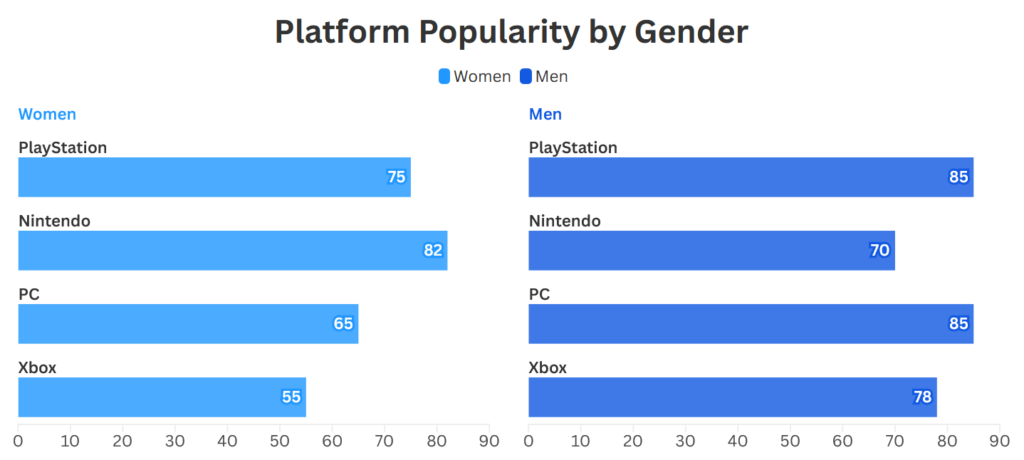
Gender Preferences by Platform
Platform preference varies significantly between women and men. This chart highlights how each demographic gravitates toward different systems, revealing clear patterns in engagement and brand affinity.
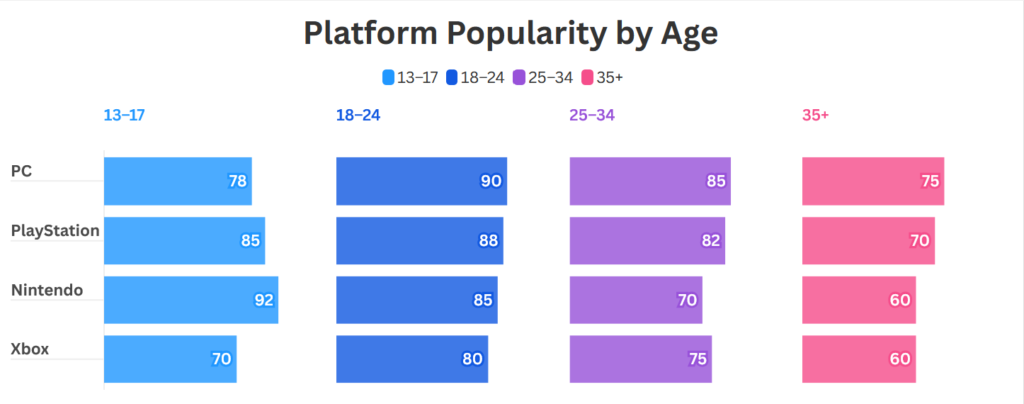
Age Breakdown of Platform Engagement
Each generation plays differently. This chart reveals how age influences platform choice, from Nintendo’s dominance among teens to PC’s strength with older players
Love & Hate: The Emotional Pulse Behind Games
| ❤️ What Players Love | 💔 What Players Hate |
|---|---|
| Visual ambition & technical quality — players reward games that push graphical boundaries (Hellblade II, Wukong) | Performance issues at launch — bugs and crashes are the #1 source of backlash |
| Fresh mechanics & innovation — titles that break genre rules gain fast traction (Palworld, Manor Lords) | Repetitive or shallow content — players expect depth and variety in premium releases |
| Strong storytelling & emotional depth — narrative‑driven games build loyalty | Over‑marketing vs. under‑delivering — high‑hype games face harsher criticism |
| Freedom & player agency — open‑world, crafting, and sandbox elements drive positive sentiment | Unfocused gameplay identity — games that try to be “everything at once” frustrate players |
Core Emotional Drivers
1. Escapism & Immersion
Players want worlds that feel bigger, richer, and more absorbing than everyday life. Cinematic visuals, atmospheric sound, and strong world‑building amplify this effect.
2. Mastery & Challenge
Soulslike combat, deep systems, and skill‑based mechanics satisfy players who crave progression and personal achievement.
3. Identity & Expression
Customization, role‑play, and narrative choices allow players to project themselves into the game — or become someone entirely new.
4. Novelty & Surprise
Games that offer something unexpected — a new mechanic, a strange world, a bold artistic direction — generate excitement and conversation.
5. Social Connection
Co‑op modes, shared experiences, and community‑driven content strengthen emotional investment and extend a game’s lifespan.
6. Power Fantasy
Players enjoy feeling powerful, capable, or heroic — especially in action‑heavy titles or open‑world games with high agency.
7. Emotional Resonance
Strong storytelling, memorable characters, and impactful moments create lasting emotional attachment and word‑of‑mouth momentum.
This concludes Part 1 of our Video Games Premium Insight series — a focused look at how the major 2024–2026 releases shape platform perception, user sentiment, and the emotional drivers behind today’s gaming landscape.
But this is only half the story.
In Part 2, we explore the Evergreen Ecosystems — Roblox, Minecraft, Fortnite — the persistent worlds that operate beyond release cycles and continue to influence player behavior, discovery, and platform identity across every region.
If premium releases define the moment, Evergreen ecosystems define the era. Together, both reports give you the full picture of how players experience modern gaming.
💸 Pricing in Traditional Gaming
How much does gaming really cost? (with clear definitions)
After exploring the emotional drivers behind traditional games, it’s important to look at something far more practical: the cost of playing. This is one of the most common questions readers have — and one of the biggest differences between traditional games and Evergreen ecosystems.
Traditional gaming has a high entry cost and a predictable spending pattern. Below is a clear breakdown with short definitions of the key terms.
🎮 1. Upfront Cost of Traditional Games
Traditional games follow a familiar economic model built around pay first, play later.
AAA Games (High‑Budget Blockbusters)
AAA (pronounced “triple‑A”) refers to games produced by major studios with large budgets, large teams, and cinematic production values.

Popular AAA examples:
- Grand Theft Auto V
- The Legend of Zelda: Breath of the Wild
- Call of Duty: Modern Warfare
- Red Dead Redemption 2
These titles typically launch at premium prices.
DLC — Downloadable Content (Paid Add‑Ons)
DLC refers to optional content released after launch: new missions, maps, characters, or story chapters.
Popular DLC examples:
- The Witcher 3 – Blood and Wine
- Elden Ring – Shadow of the Erdtree
- Destiny 2 – The Taken King
- Skyrim – Dawnguard
These DLCs extend the game’s life but add to the total cost.
Expansions (Large DLC Packs)
Expansions are bigger than DLC — often adding major new areas, systems, or story arcs.
Popular expansion examples:
- World of Warcraft – Shadowlands
- Final Fantasy XIV – Endwalker
- Civilization VI – Rise and Fall
- Diablo III – Reaper of Souls
Expansions are priced like small standalone games.
Collector Editions (Premium Bundles)
Collector editions include physical or digital extras.
Examples:
- God of War Ragnarök – Jötnar Edition
- Halo 3 – Legendary Edition
- Cyberpunk 2077 – Collector’s Edition
These can cost several times more than the base game.
MMO — Massively Multiplayer Online Games (Persistent Online Worlds)

MMO stands for Massively Multiplayer Online, a genre where thousands or millions of players share the same persistent world. These games continue running even when the player logs out, with events, economies, and communities evolving in real time.
Popular MMO examples:
World of Warcraft
Final Fantasy XIV
Guild Wars 2
EVE Online
Why MMOs matter for pricing: MMOs often use unique pricing models, such as:
- monthly subscriptions
- paid expansions
- cosmetic micro transactions
- optional boosts
- lifetime passes (rare today, but historically important)
This makes MMOs one of the most expensive long‑term categories in traditional gaming — not because of the upfront cost, but because the world never stops evolving.
Subscriptions (Online Access or Game Libraries)
Some platforms require ongoing subscriptions:
- Xbox Game Pass — access to a large rotating library
- PlayStation Plus — online play + monthly games
- Nintendo Switch Online — online play + classic titles
These services offer value but add recurring costs.
Hardware (Consoles, PCs, Accessories)
Traditional gaming often requires dedicated hardware:
- consoles
- gaming PCs
- controllers
- headsets
- storage upgrades
This is where the real cost difference becomes clear.
☁️ 2. Cloud Gaming Alternatives
Cloud gaming allows players to stream games over the internet — similar to streaming movies — without needing a console or gaming PC. Players only need a screen (phone, tablet, laptop, or smart TV), a controller or touchscreen, and a stable internet connection.
Cloud Gaming (Streaming Instead of Owning Hardware)

Cloud gaming replaces:
- consoles
- gaming PCs
- downloads
- storage
- hardware upgrades
You play on almost any device: phone, tablet, laptop, smart TV. This is one of the biggest shifts in modern gaming:
you no longer need expensive hardware to play high‑end titles.
Major Cloud Services
- Xbox Cloud Gaming (included with Game Pass Ultimate)
- GeForce Now (tiers vary by performance)
- PlayStation Cloud Streaming (PS Plus Premium)
- Amazon Luna
- Boosteroid
Cloud gaming dramatically lowers hardware cost, but requires:
- a subscription
- a stable internet connection
🏗️ 3. The Most Expensive Games Ever Made (Development Cost)
Some traditional games cost more to produce than Hollywood films.
Grand Theft Auto V
One of the most expensive released games, with a combined development + marketing budget of around $265 million.
Cyberpunk 2077
A massive production with a budget estimated around $174 million.
These budgets explain why traditional games must charge high prices at launch.
Red Dead Redemption 2
Another blockbuster with a budget estimated between $170–240 million, known for its cinematic detail and enormous development team.
These budgets explain why traditional games must charge high prices at launch.
.
🏆 4. The Most Expensive Games for Customers
Some games become extremely expensive for players — not because of development cost, but because of rarity, hardware, or specialized equipment.
Rare Cartridges (Collector Market)
- Stadium Events (NES) can sell for tens of thousands of dollars.
- Neo Geo AES cartridges can reach $10,000+.
Collector Editions (Premium Bundles)
Modern Collector editions can cost hundreds of dollars, especially when they include statues, art books, or exclusive items.
Simulation Setups (Hardware‑Heavy Genres)
Flight simulators, racing simulators, and VR rigs can cost more than a console or PC combined.
MMO Lifetime Subscriptions
Some older MMOs offered lifetime passes costing several hundred dollars upfront.
These examples show how traditional gaming can become very expensive, depending on how deep a player goes.
From Traditional Games to Evergreen Worlds
Before moving into Evergreen games in the next part, there is one title worth mentioning because it sits exactly between both models.
🔄 Star Citizen: A Hybrid Case

Star Citizen began as a traditional crowdfunded game, but after more than a decade of development it has evolved into something different:
- Budget exceeding $500 million
- No final release — players access a continuously updated public alpha
- A persistent universe that grows over time
- Long‑term monetization through ships, cosmetics, and supporter tiers
It is not a finished product, yet millions of players already participate in its evolving world. This makes Star Citizen a natural bridge between the traditional model and the Evergreen ecosystems we will explore in the next part.
→ Next: Video Games Premium Insight – Part 2
TEST OF THE DAY 1
We need to see if the Post no sidebar is behaving, also we will try to see if there are restrictions to get into premium content